
Have you ever found yourself staring at a screen for an hour, completely captivated by a grid of colorful blocks, a complex maze, or a series of cryptic riddles? If so, you are not alone. Puzzle games are one of the oldest, most resilient, and most deeply beloved genres in the history of interactive entertainment. From the monochromatic falling blocks of the 1980s to the breathtakingly beautiful, narrative-driven 3D environments of today, the appeal of a good puzzle remains timeless.
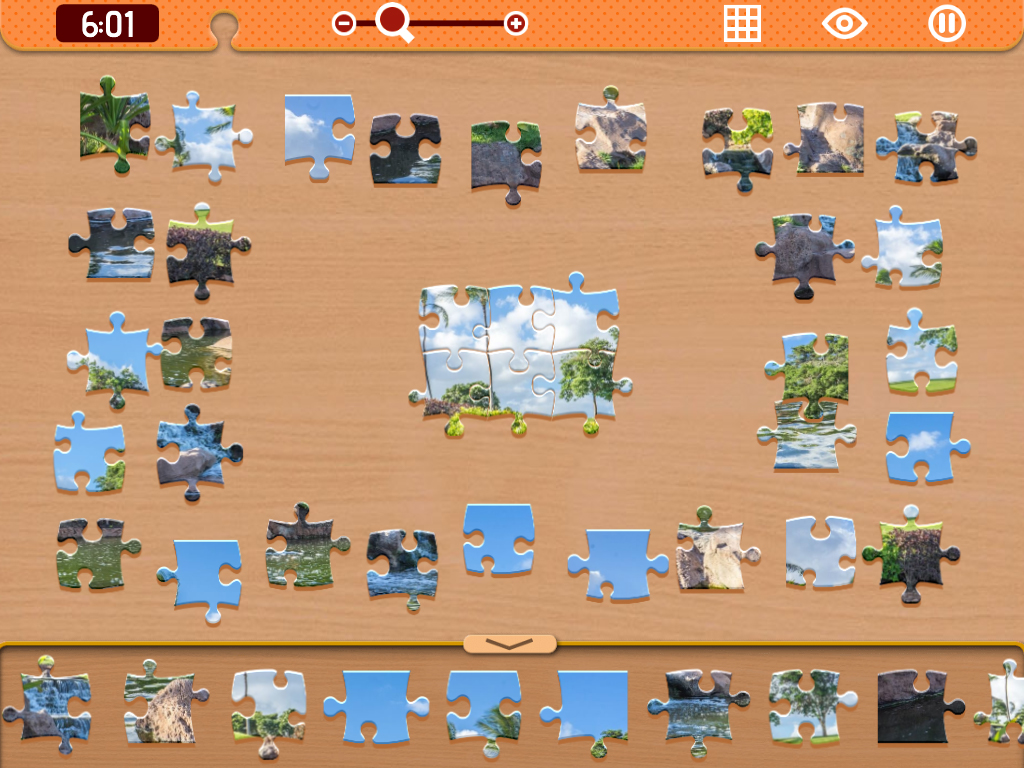
But what exactly is it about these games that keeps millions of players hooked? Why do we willingly spend our free time frustrating ourselves with complex logic problems? The answers lie in a perfect mix of psychology, clever game design, and the universal human desire to find order in chaos.
The Psychology of the Puzzle: Why Our Brains Crave the Challenge
At their core, human beings are natural problem solvers. From an evolutionary standpoint, our survival depended on our ability to recognize patterns, predict outcomes, and decipher our environment. Puzzle games tap directly into this hardwired biological trait.
When you play a puzzle game, your brain experiences a unique psychological journey:
- The Dopamine Rush of the “Aha!” Moment: There is a specific instant in puzzle gaming where everything clicks. After minutes—or even hours—of confusion, the solution suddenly becomes clear. When you finally slide the correct block into place or decipher the code, your brain releases a surge of dopamine. This “aha!” moment provides a profound sense of satisfaction that few other genres can replicate.
- Stress Relief Through Focus: It sounds counterintuitive that a challenging game can relax you, but puzzle games are excellent tools for mindfulness. Because they require concentrated mental effort, they force you to tune out the stresses of daily life. For many, matching tiles in a casual game acts as a form of active meditation.
- Cognitive Enhancement: Unlike games that rely purely on fast reflexes, puzzle games act as a workout for your gray matter. They test and improve spatial awareness, short-term memory, logical reasoning, and patience.
The Evolution of the Genre: From Tetris to Immersive Worlds
The history of puzzle games is a fascinating journey of technological adaptation. The genre has constantly evolved to embrace new hardware, yet it has never lost its core identity.
The Classic Era
In the early days of gaming, hardware limitations meant that developers had to rely on pure gameplay mechanics. This era gave birth to Tetris, arguably the most perfect video game ever created. Its simple premise—arranging falling geometric shapes—proved that you did not need cutting-edge graphics to create an addictive experience. Other classics like Lemmings and Minesweeper further cemented the idea that strategy and logic were highly marketable.
The Casual Mobile Revolution
The introduction of smartphones changed everything. Touchscreens were practically tailor-made for puzzle mechanics. Swiping to match three candies or tapping to cut a rope felt incredibly natural. Games like Candy Crush Saga, Angry Birds, and Monument Valley turned billions of smartphone users into casual gamers overnight. Puzzle games became the ultimate companion for daily commutes and waiting rooms.
The Modern Masterpieces
Today, the puzzle genre has merged with high-production narratives and stunning visual art. Games like Portal, The Witness, and The Talos Principle prove that puzzles can be the driving force behind deep, philosophical stories and breathtaking open-world exploration. You are no longer just moving pieces on a flat board; you are manipulating physics, bending time, and interacting with fully realized worlds.
Key Elements That Make a Puzzle Game Truly Great
Not all puzzle games are created equal. The market is flooded with thousands of options, but the truly legendary ones share a few specific design principles:
- Easy to Learn, Difficult to Master: A great puzzle game has low barriers to entry. A child should be able to understand the basic rules within thirty seconds. However, the depth of the mechanics should allow for layers of complexity that challenge even seasoned veterans.
- Fairness in Design: The best puzzles never feel cheap. When a player fails, they should feel like it was because of their own oversight, not because the game cheated them. The rules must be consistent.
- The Perfect Difficulty Curve: If a game is too easy, the player gets bored. If it is too difficult too quickly, the player gets frustrated and quits. Great puzzle design relies on a smooth difficulty curve, gradually teaching the player new skills before testing them in high-stakes scenarios.
Conclusion
Puzzle games are far more than just a way to pass the time; they are a celebration of human curiosity and intellect. Whether you prefer a quick five-minute session of a mobile tile-matcher or a deep, narrative-driven journey through a complex 3D labyrinth, the genre offers something for absolutely everyone.
In a fast-paced world full of chaotic action and sensory overload, puzzle games provide a comforting space where logic prevails, order can be restored, and every problem has a definitive solution. So, the next time you find yourself stuck on a particularly difficult level, take a deep breath, smile, and remember that your brain is doing exactly what it was born to do.